HUMANE EXCLUSION & HYGIENE
Professional Bird Management & Deterrent Solutions
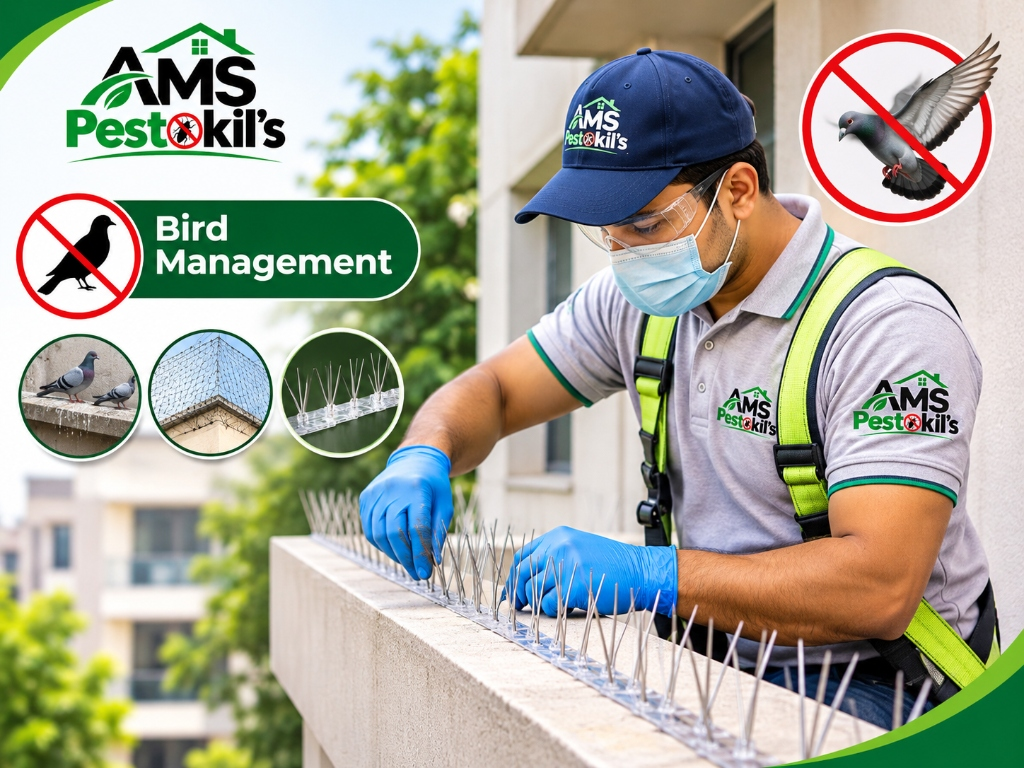
Durable bird exclusion netting, stainless steel anti-perch spikes, and humane deterrent solutions for balconies, building ledges, AC outdoor units and commercial facilities.
 Exclusion & Spikes
PEST PROFILE & INSIGHTS
Protecting Buildings from Pigeon and Bird Hazards
Urban rock pigeons (Columba livia) have adapted aggressively to high-rise architecture, nesting on balcony ledges, AC outdoor compressor brackets, and plumbing shafts.
Pigeon droppings contain uric acid that corrodes building masonry, degrades metal railings, and etches automotive paint finishes.
Accumulated droppings and nesting debris harbor dangerous fungal spores (such as Cryptococcus and Histoplasma) and bird mites that cause respiratory illness and severe itching.
Pigeon nests clog rainwater downspouts and damage delicate AC compressor cooling fins. Humane exclusion through netting and anti-roost spikes is the only permanent solution.
WARNING INDICATORS
Signs of Bird Management Activity
Recognizing early warning indicators helps address the issue before significant damage or contamination occurs.
Persistent Roosting & Cooing
Pigeons gathering, courting, and roosting along balcony parapets, window sills, and roof ledges from early dawn.
Corrosive White Droppings
Heavy accumulation of droppings covering balcony floors, railings, air conditioner units, and windows.
Twigs & Feathers
Nesting materials, twigs, feathers, and broken eggshells wedged behind AC units and plumbing pipes.
Foul Odors & Bird Mites
Musty, foul smell and microscopic bird mites crawling into living areas through adjacent window frames.
INSPECTION HOTSPOTS
Frequently Affected Property Areas
Common harborages and structural zones where this pest is typically discovered during our site inspections.
Residential Balconies
Balcony openings, handrail ledges, and drying rack zones.
AC Outdoor Units (ODUs)
Brackets behind compressors, piping insulation, and duct covers.
Plumbing Shafts & Duct Voids
Vertical building utility shafts, sewer vent stacks, and fire pipe risers.
Commercial Signboards & Ledges
Facade signage letters, architectural parapets, canopies, and warehouse beams.
METHODOLOGY
Our Systematic Inspection Approach
Before recommending or applying any treatment, our technicians execute a structured diagnosis.
01
Structural Measurement & Anchor Audit
Precise laser measurement of balcony openings, ledge depths, and masonry tensile strength for anchor fixings.
02
Roosting vs. Nesting Classification
Determining if birds are casually perching or heavily nesting with eggs, which requires specialized clearance.
03
Hardware Selection
Selecting UV-stabilized high-density polyethylene (HDPE) netting or 304-grade stainless steel anti-perch spikes.
TREATMENT TECHNIQUES
Targeted Treatment Protocols
Every formulation and application method is chosen based on pest species, property type, and safety parameters.
UV-Stabilized HDPE Balcony Netting
Installing nearly invisible high-tensile knotted netting anchored with stainless steel wire frames and brass fasteners.
Marine-Grade 304 Stainless Steel Spikes
Fixing polycarbonate-base stainless steel blunt spikes along narrow ledges, parapets, and AC unit tops to prevent landing.
Duct & Shaft Bird Proofing
Enclosing building utility shafts with heavy-gauge netting to stop birds from nesting in riser voids.
Decontamination & Sanitation
Cleaning and sanitizing affected balconies with disinfectant to eliminate bird mite and fungal contaminants.
CUSTOMER GUIDANCE
Preparation & Safety Guidelines
Simple measures to ensure the treatment is applied safely and achieves the highest efficacy for your premises.
STAGE 1
Before Treatment
Clear movable balcony pots, laundry racks, and outdoor chairs to give installation technicians unobstructed access.
STAGE 2
During Application
Our trained technicians wear safety harnesses when installing netting along high-rise building perimeters.
STAGE 3
After Care & Safety
Inspect netting tension periodically. Do not cut netting wires or hang heavy laundry directly on the mesh.
SUSTAINABLE PROTECTION
Long-Term Prevention Recommendations
Sustaining pest-free living requires sensible sanitation, moisture management, and physical exclusion practices.
Do Not Feed Birds on Balconies
Scattering bread crumbs or grains creates habitual roosting and attracts larger flocks.
Protect AC Compressor Units
Install anti-perch spikes on top of outdoor AC compressors to prevent nesting beneath.
Keep Trash Bins Covered
Eliminate easy food sources in open building courtyards and terrace gathering areas.
Repair Damaged Vent Covers
Ensure exterior exhaust vents have wire louvers so pigeons cannot enter wall voids.
CLEAR ANSWERS
Frequently Asked Questions
Common questions regarding our bird management procedures, safety measures, and expected timelines.
No. We use premium translucent white or black UV-treated monofilament netting with optimal 25mm to 50mm square mesh that preserves your panoramic view and ventilation while blocking birds.
No. Anti-perch spikes feature blunt tips that make it physically uncomfortable or impossible for birds to land, humanely encouraging them to move away without physical injury.
Our UV-stabilized HDPE netting resists weathering, solar degradation, and monsoon moisture, typically lasting 5 years or longer without losing tension.
Yes. Our installation technicians are certified for working at heights and use professional safety harnesses and anchoring protocols.
RELATED SOLUTIONS
Complementary Pest Management Services
Often pest concerns occur simultaneously. Explore other targeted treatments we provide across Bengaluru properties.
TRANSPARENT & HONEST CONSULTATION
Need Professional Bird Management for Your Property?
Contact AMS PestOkils today for an honest, inspection-led assessment. We evaluate the concern and suggest a practical treatment approach tailored to your space.