
WOODWORK & STRUCTURAL DEFENSE
Termite Inspection & Treatment Solutions
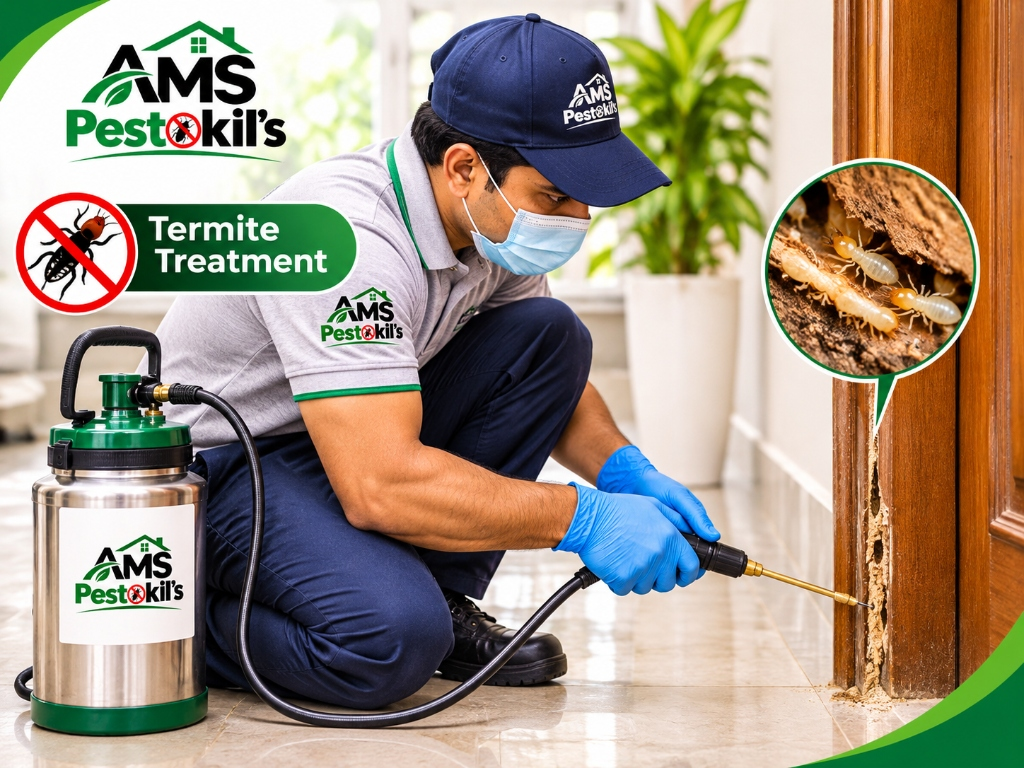
Comprehensive assessment and drill-fill-seal subterranean termite barrier treatments to safeguard wooden fixtures, door frames, flooring and structural woodwork.
 Structural Protection
PEST PROFILE & INSIGHTS
The Silent Destruction of Subterranean Termites
Subterranean termites live in underground soil colonies and build protective mud tunnels to invade buildings. Because they consume cellulose from the inside out, extensive hollow structural damage often occurs before surface signs become visible.
In modern Bengaluru properties, termites exploit minute expansion gaps in concrete slabs, concealed plumbing channels, and electrical conduits to reach wooden paneling.
Modular kitchen cabinets, flush doors, plywood wardrobes, wooden flooring, and costly wooden interior paneling can be ruined within months.
Surface sprays only eliminate a few foraging workers while the underground queen continues reproducing millions of new termites. True control requires creating a subterranean chemical barrier.
WARNING INDICATORS
Signs of Termite Treatment Activity
Recognizing early warning indicators helps address the issue before significant damage or contamination occurs.
Mud Tubes on Walls
Pencil-thick brown earthen tunnels running across foundation walls, skirting boards, or inside electrical switchboards.
Hollow-Sounding Timber
Door frames or skirting boards that sound empty or hollow when tapped, with paper-thin outer veneer.
Discarded Swarmer Wings
Piles of delicate translucent insect wings shed by reproductive alates near windowsills after seasonal rains.
Stuck Doors & Windows
Frames swelling or warping unnaturally as termite tunnels introduce moisture and weaken structural integrity.
INSPECTION HOTSPOTS
Frequently Affected Property Areas
Common harborages and structural zones where this pest is typically discovered during our site inspections.
Door & Window Frames
Base of wooden jambs touching tiled or concrete flooring where dampness enables subterranean entry.
Modular Wardrobes & Cabinets
Rear plywood panels flush against masonry walls, especially adjacent to bathrooms.
Skirting Boards & Flooring
Wooden parquetry, laminate flooring, and wooden baseboard trims across living areas.
Concealed Wall Cavities
Masonry expansion joints, plumbing shafts, and drywall partitions.
METHODOLOGY
Our Systematic Inspection Approach
Before recommending or applying any treatment, our technicians execute a structured diagnosis.
01
Acoustic & Visual Woodwork Check
Systematic inspection of all wooden door frames, baseboards, fixed cabinetry, and concealed wall junctions.
02
Mud Shelter Tube Tracing
Tracing active shelter tubes back to entry points along expansion joints and plumbing risers.
03
Pre/Post-Construction Protocol Planning
Formulating a drilling and injection schematic customized to the property layout and flooring materials.
TREATMENT TECHNIQUES
Targeted Treatment Protocols
Every formulation and application method is chosen based on pest species, property type, and safety parameters.
Drill-Fill-Seal Injection Method
Precision drilling at 45-degree angles along skirting and door frame joints, injecting advanced termiticide, and sealing holes with color-matched compound.
Woodwork Protective Treatment
Spraying oil/solvent-based anti-termite formulations directly onto infested wood surfaces and internal cavities.
Subterranean Chemical Barrier
Creating an undetectable non-repellent barrier in the soil/sub-slab that workers carry back to eliminate the underground colony.
Pre-Construction Soil Treatment
Treating the bottom and sides of foundation trenches and backfill soil before concrete flooring is poured.
CUSTOMER GUIDANCE
Preparation & Safety Guidelines
Simple measures to ensure the treatment is applied safely and achieves the highest efficacy for your premises.
STAGE 1
Before Treatment
Provide clear access to all exterior and interior wooden door frames, wardrobes, and perimeter walls. Empty items stored directly against suspected infested walls.
STAGE 2
During Application
Our crew uses specialized low-noise drilling equipment. Non-target individuals and pets should stay in an untreated room during injection.
STAGE 3
After Care & Safety
Allow 2 to 3 hours for treated drill points to cure. Re-drill holes are carefully sealed and matched to your tile or wood finish.
SUSTAINABLE PROTECTION
Long-Term Prevention Recommendations
Sustaining pest-free living requires sensible sanitation, moisture management, and physical exclusion practices.
Eliminate Wood-to-Soil Contact
Ensure garden soil or landscaping mulch never touches wooden door frames or wall plaster.
Fix Bathroom Seepage Promptly
Moisture leaking behind tile walls creates the warm, damp conditions subterranean termites require.
Pre-Treat New Interior Woodwork
Apply certified anti-termite primer to raw plywood before fabricating modular furniture.
Schedule Annual Audits
Have your property inspected annually to detect any exploratory mud tubes before colonies establish.
CLEAR ANSWERS
Frequently Asked Questions
Common questions regarding our termite treatment procedures, safety measures, and expected timelines.
Our technicians use precision diamond-tipped bits along the mortar joints or baseboard perimeters whenever possible. Drill holes are minute (typically 6mm to 8mm) and sealed with color-matching cement or epoxy.
Modern termiticides are undetectable to termites. They walk through the treated zone, pick up microscopic particles, and transfer the active ingredient throughout the colony through grooming, neutralizing the queen.
A professionally installed chemical barrier typically provides continuous protection for 3 to 5 years, subject to environmental conditions and structural modifications.
Yes. We treat foundation trenches, plinth masonry, and under-slab soil during construction in accordance with IS 6313 (Part 2) standards.
RELATED SOLUTIONS
Complementary Pest Management Services
Often pest concerns occur simultaneously. Explore other targeted treatments we provide across Bengaluru properties.
TRANSPARENT & HONEST CONSULTATION
Need Professional Termite Treatment for Your Property?
Contact AMS PestOkils today for an honest, inspection-led assessment. We evaluate the concern and suggest a practical treatment approach tailored to your space.