WALL, CORNICE & CEILING SANITATION
Lizard & Spider Management Solutions
Targeted repellent barrier treatments, cobweb removal, and insect prey suppression to keep residential walls, cornices, light fixtures and commercial premises free of nuisance pests.
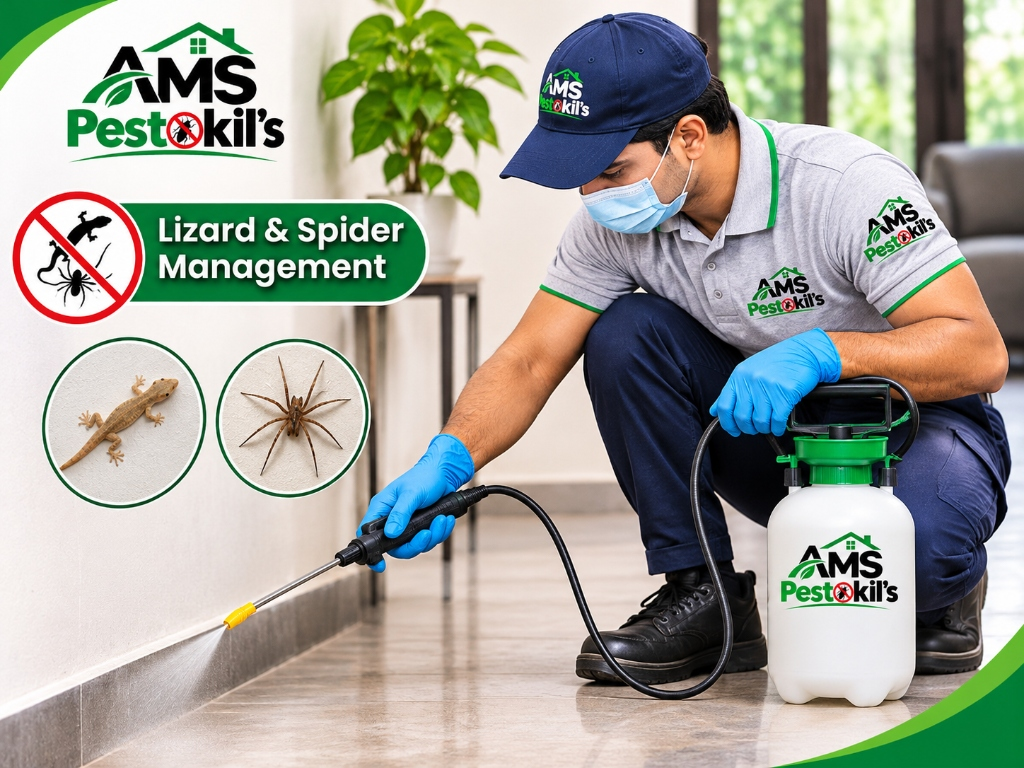 Wall & Crevice Defense
PEST PROFILE & INSIGHTS
Overcoming Lizard and Spider Nuisances
Common wall geckos (Hemidactylus) and spiders frequently invade interior spaces in search of flying insects drawn to artificial lighting. While non-venomous, their presence creates significant distress, phobias, and unsightly stains.
Lizard droppings leave acidic white-and-black deposits on walls, curtains, and kitchen counters that can harbor Salmonella bacteria.
Spiders construct dust-trapping cobwebs across high ceiling corners, chandelier fixtures, window grills, and exterior balconies.
The key to long-term control is a dual approach: applying specialized sensory repellents that deter lizards from perching, and suppressing the smaller flying insects that serve as their primary food supply.
WARNING INDICATORS
Signs of Lizard & Spider Management Activity
Recognizing early warning indicators helps address the issue before significant damage or contamination occurs.
Frequent Wall Sightings
Lizards perching behind wall hangings, above light fixtures, or near open balcony doors at night.
Bi-Colored Droppings
Small dark droppings with a distinct white uric acid tip found on window sills, floors, and along wall corners.
Persistent Cobwebs
Sticky, dust-laden webs accumulating around ceiling fans, recessed spotlight frames, and storage corners.
Egg Clusters in Crevices
Small, round, white calcified lizard eggs found tucked behind picture frames and electrical switchboards.
INSPECTION HOTSPOTS
Frequently Affected Property Areas
Common harborages and structural zones where this pest is typically discovered during our site inspections.
Ceilings & Cornice Mouldings
High ceiling joints, cove lighting channels, and chandelier mountings.
Light Fixtures & Windows
Wall sconces, balcony spotlights, window grills, and sliding glass tracks.
Behind Wall Furniture
Rear surfaces of wall-mounted televisions, mirrors, canvas art, and wall clocks.
Utility Balconies & Shafts
Washing machine alcoves, electrical conduit risers, and exterior louvers.
METHODOLOGY
Our Systematic Inspection Approach
Before recommending or applying any treatment, our technicians execute a structured diagnosis.
01
Harborage & Perch Identification
Inspecting warm areas behind electrical appliances, picture frames, and exterior lighting that attract insects.
02
Entry Gap & Vent Audit
Examining sliding door bottom gaps, exhaust duct margins, and unmeshed balcony vents.
03
Prey Insect Density Check
Evaluating flying midge and moth populations sustaining lizard presence inside the building.
TREATMENT TECHNIQUES
Targeted Treatment Protocols
Every formulation and application method is chosen based on pest species, property type, and safety parameters.
Sensory Repellent Barrier Spray
Applying targeted organic or low-toxicity sensory deterrent formulations along window frames, light margins, and cornices.
Mechanical Cobweb Sanitization
Specialized electrostatic brushes to clear existing spider webs and egg sacs from high-ceiling zones.
Prey Insect Suppression
Targeting gnats, moths, and midges around entry points to eliminate the food source that draws geckos indoors.
Crevice Sealing Guidance
Identifying wall gaps and exhaust pipe collars requiring silicone caulking or wire screening.
CUSTOMER GUIDANCE
Preparation & Safety Guidelines
Simple measures to ensure the treatment is applied safely and achieves the highest efficacy for your premises.
STAGE 1
Before Treatment
Move fragile wall decor or paintings slightly away from walls if high treatment is needed. Cover open food items on countertops.
STAGE 2
During Application
Technicians will treat window sills, cornice perimeters, and behind frames. The repellent dries clear without staining.
STAGE 3
After Care & Safety
Keep windows with mesh screens closed at dusk. Avoid washing treated window frames for 48 hours.
SUSTAINABLE PROTECTION
Long-Term Prevention Recommendations
Sustaining pest-free living requires sensible sanitation, moisture management, and physical exclusion practices.
Switch to Warm LED Lighting
Replace harsh white exterior bulbs with warm yellow LEDs that attract significantly fewer flying insects.
Install Window Mesh & Door Sweeps
Keep mesh doors closed in the evenings to prevent geckos from slipping through gap margins.
Declutter Balcony Storage
Avoid stacking cartons or clutter on balconies where lizards can hide during daytime.
Clean High Ceiling Corners
Regularly vacuum ceiling cornices and behind curtains to deter spiders from spinning new webs.
CLEAR ANSWERS
Frequently Asked Questions
Common questions regarding our lizard & spider management procedures, safety measures, and expected timelines.
Our treatments utilize sensory deterrent formulations designed to repel lizards humanely, discouraging them from perching and nesting on treated surfaces without causing dead odors inside walls.
No. We use clear, non-staining micro-emulsion formulations that do not discolor emulsion paint, wallpaper, or woodwork.
Clearing webs is paired with a residual contact spray along ceiling joints that repels spiders and prevents them from anchoring new webs for several weeks.
Indoor applications typically remain effective for 60 to 90 days. Exterior balconies exposed to wind and rain may benefit from quarterly touch-ups.
RELATED SOLUTIONS
Complementary Pest Management Services
Often pest concerns occur simultaneously. Explore other targeted treatments we provide across Bengaluru properties.
TRANSPARENT & HONEST CONSULTATION
Need Professional Lizard & Spider Management for Your Property?
Contact AMS PestOkils today for an honest, inspection-led assessment. We evaluate the concern and suggest a practical treatment approach tailored to your space.